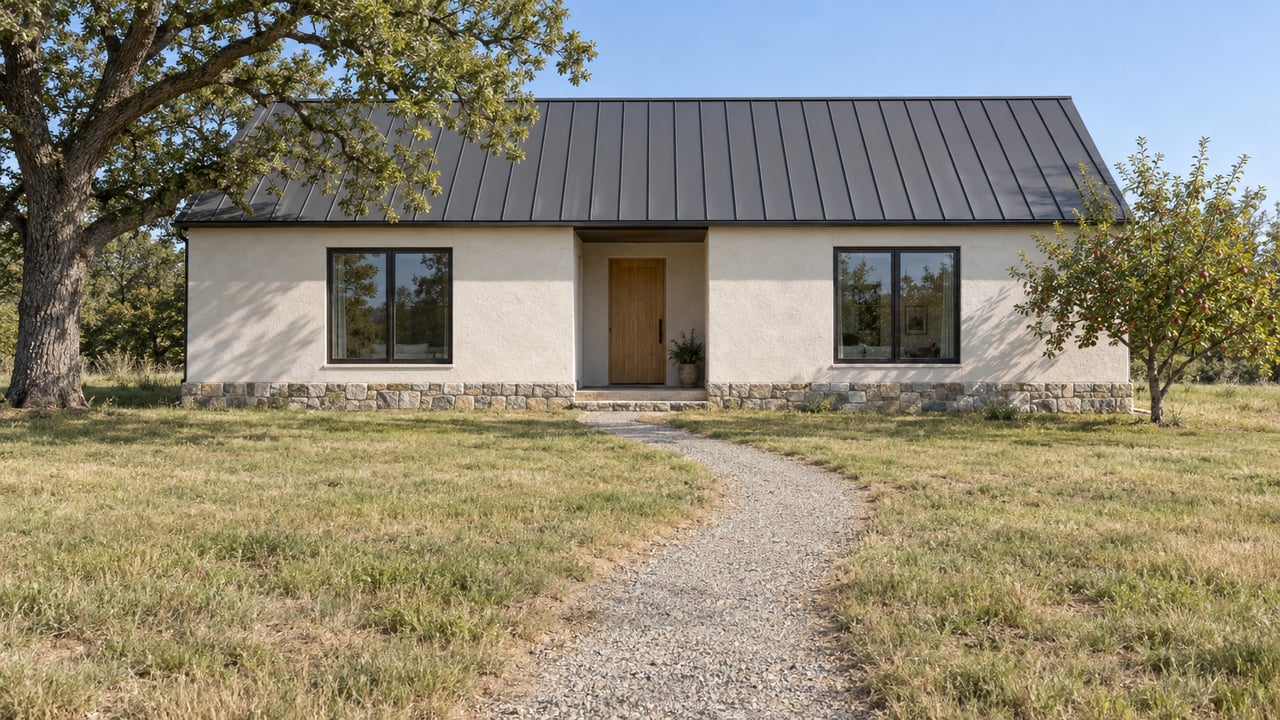
Camino's Lower Home Values Reflect a Different Kind of Property
October 1, 2026
Pull up Camino's average home value next to the countywide number for El Dorado County and the gap is hard to miss. Camino sits around $502,000. The county as a whole averages closer to $662,000. That's a difference of roughly $160,000, and the easy read is that Camino is simply the bargain corner of the foothills: same air, same views, lower price of entry.
The number is real. The bargain framing is not. Camino's housing stock leans rural in ways most of the rest of the county does not, and that mix is what pulls the average down, not softer demand for the area. Buying into that average often means buying into a private well, a septic system, and in some cases an agricultural land-use contract that doesn't show up in a listing photo and doesn't get priced into a home value estimate. None of that makes Camino a worse place to buy. It makes it a different transaction than the one the countywide comparison implies.
El Dorado County stretches from sewer-connected suburbs to unincorporated timberland, and averaging all of it into one figure hides more than it reveals.
| Area | Average home value | As of |
|---|---|---|
| Camino | about $502,000 | June 2026 |
| El Dorado County, all areas | about $662,000 | July 2026 |
| El Dorado Hills | about $920,000 | July 2026 |
These figures come from Zillow's Home Value Index. El Dorado Hills anchors the county's suburban, municipally serviced end, with HOAs, curb-to-curb sewer, and homes built on subdivision infrastructure. Camino sits closer to the county's rural end, in and around the Apple Hill growing area, where parcels are larger, roads are county-maintained rather than city-maintained, and utilities were often built one property at a time. The county average is a blend of both extremes. It isn't wrong, but it isn't describing one market either.
Most homes in Camino and the surrounding Pollock Pines area draw water from a private well rather than a municipal system. Countywide, roughly 32,500 wells are registered with El Dorado County, and an estimated 42 percent of county residents depend on one as their primary water source. The Pollock Pines and Camino area alone accounts for an estimated 3,600 of those wells, one of the higher concentrations in the county.
A well construction permit currently runs about $1,485, and county rules require a minimum 100-foot setback between a well and any septic system on the same parcel or an adjoining one. Groundwater in the county's fractured rock aquifers has generally held steady over the past five years, with normal seasonal swings of 15 to 40 feet, though some western foothill areas have seen modest declines of 8 to 12 feet tied to development and drought cycles.
None of this shows up on a standard appraisal. A well's flow rate and water quality typically fall outside what an appraiser or a general home inspector checks, which means a buyer has to arrange that testing separately and factor the timeline into escrow. Asking when a well was last flow tested is a more useful question than asking how old the pump is. You can review the county's permit and inspection framework directly through El Dorado County's Water Well Program.
Camino and neighboring Fruitridge form one of only seven agricultural districts the county has formally designated in its planning documents, alongside places like Gold Hill and Garden Valley. That designation matters because it's the part of the county most likely to include land enrolled under California's Williamson Act.
The mechanics are specific. A landowner voluntarily contracts with the county to keep land in agricultural or open-space use in exchange for being taxed on that use rather than on market value, a reduction the state's own conservation department estimates at 20 to 75 percent of the property tax bill. The contract runs on a rolling 10-year term and, critically, it runs with the land. When a Williamson Act parcel sells, the new owner inherits the contract's restrictions along with the tax benefit. Only the landowner can request cancellation, and the county has to make specific findings before approving it, plus the landowner has to pay a cancellation fee tied to the property's unrestricted market value. An opportunity to sell the land for something else is explicitly not enough reason for the county to grant cancellation.
You can see what this looks like in practice on parcels marketed for their orchard or vineyard potential near Apple Hill, land described as suited to timber, orchards, vineyards, or a private estate, set near Blakely Reservoir and the Apple Mountain Golf Course. That kind of listing reads as pure upside: acreage, views, privacy. Whether it also carries a Williamson Act contract determines whether a buyer can eventually build a large non-agricultural residence on it without triggering a cancellation process, or whether the land is locked into agricultural-compatible use for the foreseeable future. That single fact changes what the acreage is actually for. You can read the state's plain-language explanation of how these contracts work through the California Department of Conservation.
KDS Homebuyers explains that California requires sellers to disclose known septic issues through the state's Transfer Disclosure Statement, but disclosure only covers what a seller knows. Whether a system is actually sound is a separate question, and it's usually answered during the buyer's inspection period rather than before a home ever gets listed.
A septic inspection is its own service call, done by a licensed septic contractor rather than a general home inspector, and it typically includes locating the tank, running a flow test, and checking the drainfield for signs of saturation. Regular pumping every three to five years is routine maintenance, not an inspection, and most lenders want documentation from the current escrow period rather than an old pump receipt. If a system does fail, a straightforward repair might run a few thousand dollars, while a full drainfield replacement, the most common deal-breaker in these transactions, can run well past $20,000.
For a buyer comparing a Camino property against a sewer-connected home elsewhere in the county, this is the piece that's easy to forget until it's already holding up escrow. Building in time for a licensed septic inspection early, rather than treating it as a formality near closing, keeps that timeline from becoming a surprise.
The $502,000 average isn't a discounted version of an El Dorado Hills home. It's the average price of a different bundle: a private well instead of a water bill, a septic system instead of a sewer connection, and in some corners of the Camino/Fruitridge district, land-use restrictions that came with the parcel and will still be there after you close. Comparing that number to the countywide average tells you the two markets exist. It doesn't tell you what you're actually buying.
For a buyer weighing acreage near Apple Hill against a subdivision lot closer to Placerville or El Dorado Hills, the more useful comparison isn't the price gap. It's asking for the well's most recent flow test, the septic system's inspection date, and whether the county's planning department shows an active Williamson Act contract on the parcel. Those three answers tell you more about what you're paying for than any average ever will.
Does a lower average price mean a Camino home is a better deal? Not automatically. It reflects a housing mix weighted toward rural infrastructure and, in some cases, agricultural land-use contracts, rather than weaker demand for the area.
How do I find out if a specific parcel has a Williamson Act contract? The county assessor's office and planning department maintain records of active contracts, since the restriction is recorded against the property and transfers with ownership.
Do wells and septic systems get inspected automatically when a home is listed? No. Both typically require separate inspections arranged during escrow, apart from the general home inspection, and lenders often want documentation from the current transaction rather than older maintenance records.
If you're weighing a Camino property against something closer to town, or trying to figure out what a specific parcel's zoning and land-use history actually mean for your plans, James Naulty has spent two decades working transactions across these exact foothill pockets. Let's Connect and go through the specifics together before you write an offer.
This article is general information, not legal, tax or financial advice. Consult a qualified professional about your situation.
Stay up to date on the latest real estate trends.
Get assistance in determining current property value, crafting a competitive offer, writing and negotiating a contract, and much more. Contact me today.