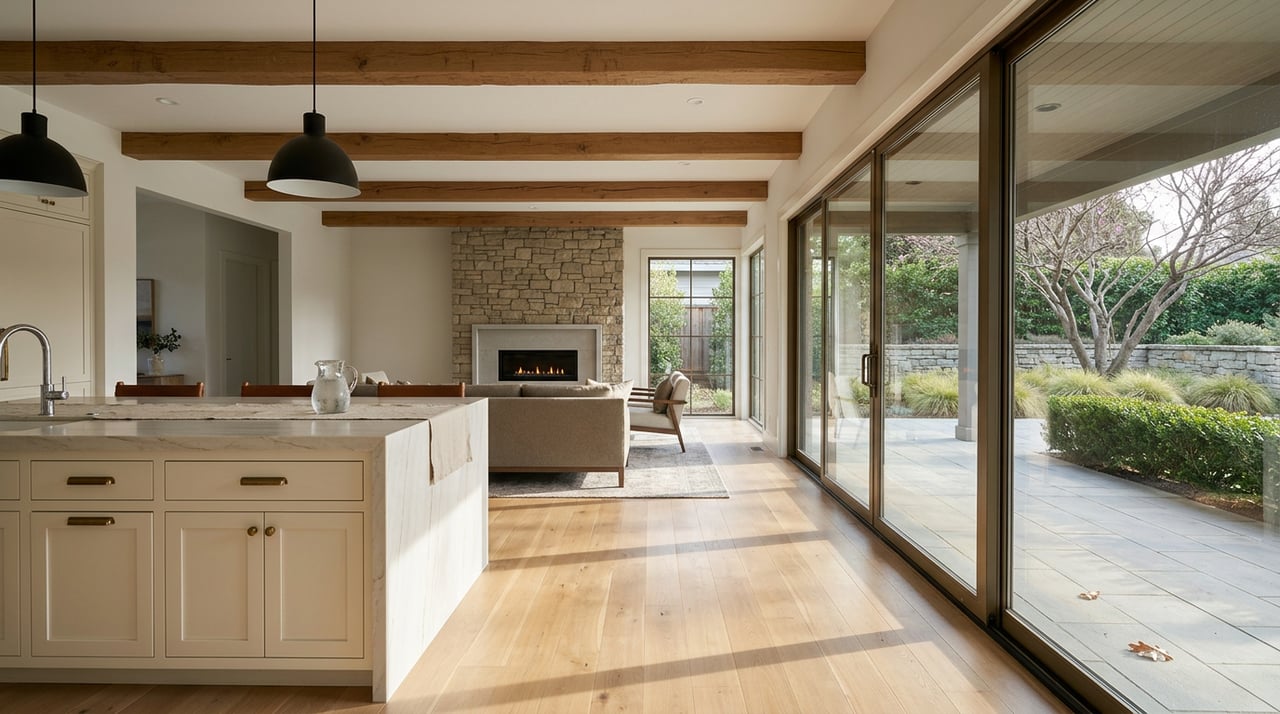
Folsom Ranch New Construction vs. Resale Folsom Homes: True Costs
September 17, 2026
Two buyers pull up the same Folsom search this month. One is looking at a four-bedroom under construction at Tri Pointe's Canterly collection in Folsom Ranch, priced from $615,400 with a builder-subsidized rate that undercuts the market. The other is looking at a similarly sized resale in an established neighborhood north of Highway 50, priced higher on paper but with no builder incentive attached. On the mortgage calculator, the new build wins. Lower rate, similar payment, brand-new everything.
What the calculator doesn't show is the second bill that arrives with the new build: a special tax tied to the parcel itself, separate from the mortgage, separate from the county's base property tax, and unrelated to how good a rate the buyer locks in.
Folsom Ranch is the large master-planned expansion south of Highway 50 where builders including Toll Brothers, KB Home, and Tri Pointe Homes are actively selling. Toll Brothers' Preserve at Folsom Ranch has offered a 30-year fixed rate with a 2/1 buydown as low as 3.99 percent in the first year. KB Home's Esquire at Folsom Ranch has run its own promotional financing. These incentives are real, and they meaningfully lower a buyer's first-year payment.
They don't touch the second line on the tax bill: Mello-Roos.
Community Facilities Districts are a mechanism California cities use to fund the roads, sewers, parks, and schools that a new development needs before anyone lives there. The California Debt Financing Guide says Mello-Roos bonds are payable from special taxes imposed on real property. Those special taxes are on top of the standard 1 percent base property tax under Proposition 13. In Folsom Ranch specifically, that special tax varies by parcel and phase, adding to what a $750,000 new build actually costs to hold.
Compare that to Folsom's older, established neighborhoods, roughly the areas built out in the 1990s around Broadstone and Willow Creek. Many of those parcels carry Mello-Roos obligations too. Buyers there often see special taxes.
Zillow's home value index put the citywide Folsom average at $763,818 as of July 2026, down 1.2 percent over the previous year. In Historic Folsom specifically, the average sat higher relative to its own trend, up 1.6 percent over the same period to $681,813. Comparing a citywide average to a single subdivision's median isn't a clean apples-to-apples read, since Folsom Ranch's own trailing 12-month median has been tracked separately at $837,586, up roughly 11 percent from the year before. But the direction of the split is consistent with what the tax structure predicts: newer inventory commands a real premium, and older inventory is quietly holding its own without a CFD dragging on affordability.
The California Department of Real Estate's 2026 Real Estate Law excerpts describe a continuing lien securing Mello-Roos special taxes in qualifying property sales.
The infrastructure argument for CFDs is straightforward: someone has to pay for the roads and schools a new subdivision needs, and it shouldn't be the neighbors who were already there. The City of Folsom's own planning documents are explicit on this point. Under the terms of Measure W, schools in the Folsom Plan Area are funded through developer fees, state funds, and a general obligation bond passed in 2007, not by existing Folsom taxpayers.
What that means in practice is a build-out that's designed to take 25 to 30 years, and a school calendar that lags behind the housing calendar by design. Two elementary schools, Mangini Ranch and Alder Creek, are already open and serving Folsom Ranch families, built at a cost of roughly $85 million each. The next wave isn't close. Rocky Ridge Elementary and Granite Springs Elementary are both projected to open in 2028. Prairie City Middle School and Buffalo Creek High School aren't projected to open until 2031, and district officials have said those timelines depend on future funding and development pace, not a fixed date.
In December 2025, the Folsom City Council approved a change to the specific plan that relocated the planned middle school site to sit next to the future high school site in the Alder Creek West area, a shift city planning staff described as a return to the originally proposed combined middle-high school model. It's a small administrative move, but it's a useful reminder that even the pieces already on the map can still shift before ground breaks. At full build-out, Folsom Ranch is projected to add more than 31,000 residents to the city, according to local reporting on the area's long-term facilities planning.
For a family moving into Folsom Ranch today, that means kids attending school on an existing north-of-Highway-50 campus or one of the two elementary schools already built, while paying into a special tax that's funding a middle school and high school still five years out at minimum.
One detail to consider when comparing resale homes is that Buying a resale home inside Folsom Ranch, even one built in 2021 or 2023, doesn't get a buyer out of the Mello-Roos obligation. The special tax is attached to the parcel, not the original buyer. It transfers with the house every time it sells
A five-year-old resale in Folsom Ranch won't come with a builder rate buydown to offset the special tax. A buyer comparing "used Folsom Ranch" to "older established Folsom" needs to pull the actual current-year tax bill for each specific parcel, not assume that age of construction tells the whole story.
Employment trends are another factor in assessing Folsom's housing market. local market watchers have noted that Intel cut its Folsom workforce by roughly 2,500 positions in recent years and sold its campus, without triggering the wave of distressed listings that kind of job loss might normally cause. Part of the explanation appears to be new tenants moving into some of that same space, with reports of Samsung, Qualcomm, and Agilent expanding their presence in the area. It's a reminder that the employment base underpinning demand for both new and resale Folsom inventory is shifting, not disappearing, and that a single employer headline doesn't automatically translate into inventory or price pressure.
Before writing an offer on either a new build or a resale in Folsom, it's worth walking through the same four steps regardless of which side of Highway 50 the home sits on.
Asking for the current tax information early just saves a surprise at underwriting.
If I buy a resale home inside Folsom Ranch, do I inherit the same tax? Generally yes. The obligation stays with the parcel through every sale.
Are all older Folsom neighborhoods free of Mello-Roos? Not necessarily. The only way to know for a specific address is to pull that parcel's current tax bill.
None of this makes new construction a bad choice or resale the obvious winner. It means the sticker price and the rate buydown are only two of the numbers that matter; the special tax is another cost to include in the comparison, and it can follow the house for decades.
If you're weighing a new build in Folsom Ranch against a resale in an established Folsom neighborhood and want the real all-in monthly number before you commit, James Naulty has spent more than two decades pricing homes across Sacramento, Placer, and El Dorado counties. Let's Connect and run the comparison on the specific parcels you're considering.
This article is general information, not legal, tax or financial advice. Consult a qualified professional about your situation.
Stay up to date on the latest real estate trends.
Get assistance in determining current property value, crafting a competitive offer, writing and negotiating a contract, and much more. Contact me today.